How will the application for international protection work?
From 12 June, the entire EU applies the same regulatory framework and methods when individuals apply for international protection (asylum) in any of the Member States. This article explains how the examination process is conducted and which stages are included in the procedure.
Published 25 June 2026, updated 25 August 2026
The EU’s Migration and Asylum Pact is a comprehensive set of regulations whose overarching aim is to manage migration matters in a uniform and efficient manner while safeguarding the right to asylum. The new protection procedure regulated by the Pact means that assessment, decision-making, and reception will be carried out in an equivalent manner throughout the EU.
Read about the implementation of the EU's common Migration and Asylum Pact
How to apply for protection
The protection process begins when a person expresses that they wish to apply for international protection in a member state. This is called an expression of intent, or making an application for protection.
This usually occurs early in the contact with authorities, for example, during border control or screening. The Police Authority, the Prison and Probation Service, and the Swedish Migration Agency are the competent authorities to receive such expressions of intent. The Swedish Migration Agency is responsible for examining applications for international protection in Sweden.
Information on applying for international protection in Sweden
Screening at the border or within the country
Anyone who lacks permission to enter or stay in a member state must undergo a so-called screening. Screening must take place regardless of whether a person is seeking protection or not.

It is a form of enhanced border control carried out in all member states to maintain an overview of who is coming to the Schengen area's external borders and, consequently, who is within the area. The screening concludes with the person being referred to the procedure where their case will be handled.
The Police Authority has the primary responsibility for the screening, while the Swedish Migration Agency and the healthcare regions carry out certain steps within it.
The screening can be initiated in two ways. Either the person is encountered at an external border without permission to enter – in Sweden, this usually refers to an airport or a port. Or, the person is encountered inside the country without the right to enter/stay here – this can occur, for example, during an internal alien control or because the person approaches the authorities themselves to seek assistance.
The screening consists of four checks
The screening includes the following four steps:
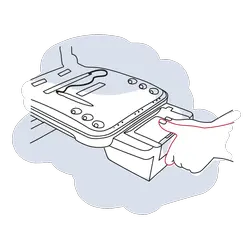
1. Identity check
Examination of ID documents, travel documents, taking photographs and fingerprints, as well as searching shared databases to see if the person is, for example, already registered in another member state.
The inspection may be carried out by both the Police Authority and the Swedish Migration Agency. If a person is seeking protection, the baseline approach is that the Swedish Migration Agency performs the identity check.
2. Security check
The Police Authority checks the individual's details against various databases to determine whether they are wanted by the authorities or may pose a security threat in Sweden or another EU country. The check may also include a body search.
3. Vulnerability assessment
The Police Authority or the Swedish Migration Agency may assess whether a person is vulnerable in a way that could be significant for the protection assessment or reception arrangements (i.e. whether the person has special needs). Where a person is seeking international protection, the baseline approach is that this assessment is carried out by the Swedish Migration Agency.
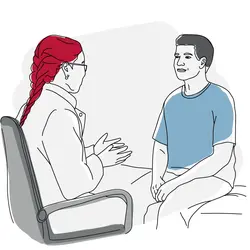
4. Health assessment
Healthcare staff from the healthcare region examine the person to assess the need for care or isolation under the Communicable Diseases Act.
Screening takes a maximum of one week
The screening must be conducted promptly. It must take a maximum of seven days for individuals encountered at an external border, and three days for those encountered within the country. By entering the screened individual into the EU's data systems, the member states gain a shared overview of who is present within the area.
If needed, individuals undergoing screening will be provided with accommodation and food at one of the Migration Agency's reception and return centers in Boden, Märsta, Mölndal, or Malmö.
Application for protection is registered
During the screening process, a person can state at any time that they want protection in Sweden. As a rule, such an application must be registered within five days. The Swedish Migration Agency is responsible for registering the application. Following this, the case will be categorized into the appropriate procedure for assessment.
The new regulatory framework introduces three overarching procedures. These regulate the processing of cases and are partially new. However, the actual assessment of protection – meaning the criteria for granting protection – is not affected by the new procedures, nor does it differ from the rules that applied before June 12, 2026.
Asylum border procedure
The asylum border procedure is a new type of procedure for Sweden. The procedure has been developed to handle applicants encountered at an external border without the right to enter the EU, whose applications for protection is likely to be rejected. It also covers cases where there are reasonable grounds to consider the applicant a security threat.
The same requirements for a full individual assessment apply in the asylum border procedure as in the other procedures.
Within the asylum border procedure, applications are handled and assessed near the border.
This involves specifically designated categories of cases – essentially the same categories that can be examined under the accelerated assessment above – as well as cases where the application can be denied examination.
This applies, for example, to:
- applicants from so-called safe countries of origin
- applicants who provide information that is not relevant to the assessment of the right to international protection
- applicants who provide improbable or false information
- applicants who can reasonably be considered a security risk.
Conduct of the asylum border procedure
Asylum border procedure is a rapid procedure (maximum of twelve weeks) that is carried out at or in connection to the border. Applicants in the asylum border procedure are not considered to have entered the territory of the member states, and they must reside at specifically designated reception centers that handle the border asylum procedure.
In Sweden, the asylum border procedure will take place at the same reception and return centers where screening is conducted, namely Boden, Märsta, Mölndal, and Malmö.
Exceptions from the asylum border procedure
In certain situations, the asylum border procedure should not be applied (or should be discontinued), and the case should instead be handled under one of the other procedures – that is, the regular or expedited procedure. For example, circumstances may come to light showing that the criteria for applying the border procedure are no longer met, or the applicant may have special reception needs that cannot be met within the asylum border procedure.
Subsequent application
If there is a final decision in any EU country where a person has applied for international protection, any further application will be regarded as a subsequent application and will be subject to special rules.
In the event of a subsequent application, the Swedish Migration Agency must first determine whether the application should be examined on its merits. The Swedish Migration Agency therefore assesses the following three things:
- New factors have emerged in the case.
- These could not have been presented earlier.
- They significantly improve the applicant's chances of being granted protection.
Only if these three conditions are met can the subsequent application be examined on its merits.
AMMR instead of Dublin
For many years, the Dublin Regulation has governed which member state is responsible for examining an asylum case according to the so-called "first country of asylum" principle – meaning that individuals wishing to seek protection in the EU must do so in the first member state they arrive in. It is now being replaced by the Asylum and Migration Management Regulation (abbreviated as AMMR).
The AMMR also includes the so-called solidarity mechanism. Among other things, this stipulates that a member state receiving a high number of protection seekers can receive assistance from other EU countries through relocation, financial support, or alternative measures.
.png)
How many people go back to their country of origin?
In this section of “The Swedish Migration Agency answers”, we highlight return and repatriation – two areas that are often confused but which are two completely different things.
.png)
This is how it works when we process cases where LGBTQI is grounds for protection
Can a person's sexual orientation, gender identity or gender expression affect how the Swedish Migration Agency assesses whether a person should be allowed to stay in Sweden?
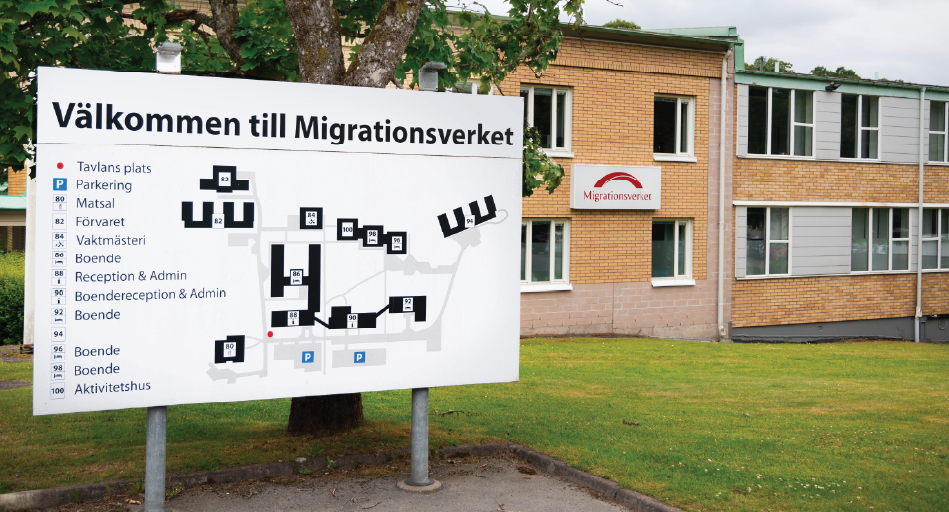
How do reception and return centres work?
Asylum seekers and persons with expulsion decisions shall live at reception and return centres. What is a reception and return centre and how do the centres work in practice? We clarify that in this part of The Swedish Migration Agency answers.